
Candi Licence Writer Website - Tales from Grenada and Beyond
Home
Grenada
    Carnival
    Island Life
    Moving to Grenada
Destinations
    Greece
    Portland, Maine
Testimonials
On Writing
About Me & Contact Info
Blog
Candi Licence Writer Website - Tales from Grenada and Beyond
  • Home
  • Grenada
    • Carnival
    • Island Life
    • Moving to Grenada
  • Destinations
    • Greece
    • Portland, Maine
  • Testimonials
  • On Writing
  • About Me & Contact Info
  • Blog
Grenada, Island Life

A Swedish Lightship’s Caribbean Retirement

January 31, 2021 by Candi Licence No Comments
Published by Lighthouse Digest, The Magazine of Lighthouses.  January-February 2021 edition. 
      Print and electronic versions available at https://www.lighthousedigest.com/ 


“What?      Are you crazy?      Don’t do that.”

“DON’T DO THAT.”

This was the broker’s advice to Dieter Burkhalter when he said he wanted to  buy an old decommissioned lightship and move it to the Caribbean.
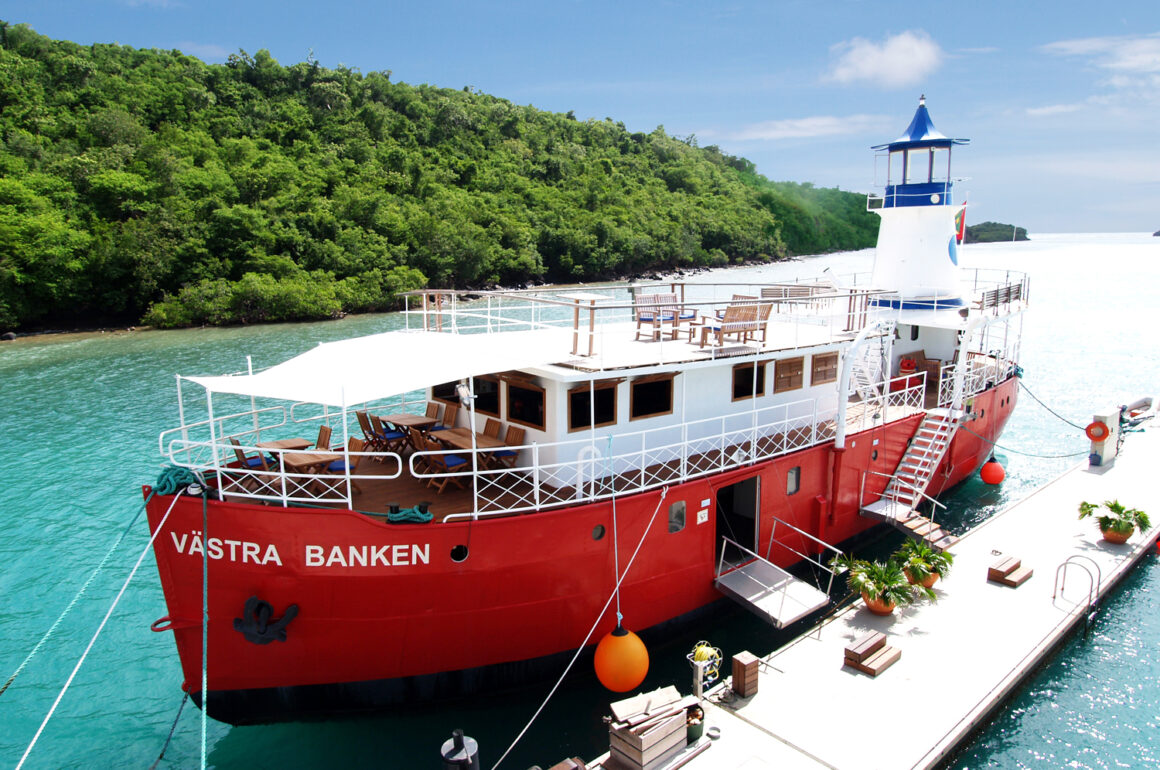
The Västra Banken, a former lightship from Sweden, at its new home in Grenada

Dieter and his wife Jana had bought land in Grenada with plans to open a marina, restaurant, and boutique hotel, and they were looking for a symbol – something unique to make their resort stand out.

Dieter surfed the internet and stumbled on a Swedish lightship that was for sale. Seeing  the  lightship,  Dieter  thought  she would be perfect – not too big, but spacious and charming. After telling Dieter he was crazy, the broker continued to dissuade him, saying it would be too hard to transport the lightship. Dieter was undeterred.

The broker sighed, “What do you want to pay?” Dieter closed the deal, and the adventure of refurbishing and transporting the lightship began.
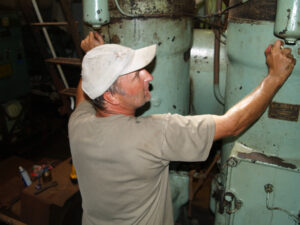
Dieter Burkhalter starting the lightship’s engine.

The lightship’s name is Västra Banken #23. Västra Banken means “the west bank,” and she was the 23rd of 37 lightships that Sweden built and deployed along Sweden’s coastline. Completed in 1900, the lightship briefly served two locations before being stationed in the Baltic Sea just north of Stockholm in 1923. She served until 1970.

Lightships (also known as “fireships” in Northern Europe) are floating lighthouses used in places  where  it  is  not  feasible to build a stationary lighthouse due to submerged reefs, sandbars, or treacherous harbors. Even though these lightships’ hulls were strong, the lightships were active only during the summer because of the dense ice floes that strained the anchor chains during the winter. Lightships anchored semi-permanently for six months from July to December and were towed to a safe harbor and stored until  the next year. The ship’s engine was only run to stabilize the lightship during heavy storms. Shipping mostly ceased during the winter because the navigational channels iced over.
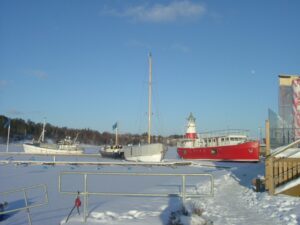
Dieter Burkhalter’s first view of the lightship.

The ship’s log shows that six men manned the lightship working in three rotating shifts – 8 hours at watch, 8 hours doing community service such as cleaning, cooking, or maintenance, and 8 hours off for personal time and sleeping.

Just imagine working in cramped quarters with no running water, heat, electricity, no communication with the outside world, and never leaving the ship for six months. The men were strong and resilient, manually completing all jobs, including managing the heavy anchor chains. In later years, generators relieved some of the most strenuous tasks,  and  the men could pursue hobbies in their spare time like fishing, birdwatching, and making crafts.

Preparing the lightship to be hoisted onto the freighter.

Sweden built a permanent lighthouse at Västra Banken in 1970, and they decommissioned the lightship. The town of Oregrund bought the lightship and installed her in the harbor. Maintenance was costly, so the town removed the superstructure, including the lantern tower, installed it at the harbor as a museum, and sold the rest of the ship as scrap. In 1999, a private owner bought the lightship and moved her to Stockholm as a houseboat. The new owner installed a similar lantern house from Lightship Trelleborgs Redd #21, in the ship’s stern.

Dieter bought the Västra Banken in 2005, and she began a trek by tugboat from Stockholm to Rostock, Germany. Rostock is a famous port city with deep expertise in ship rebuilding. Because the shipbuilding  industry was in decline, it was much less expensive to haul and refurbish the lightship in Rostock than in other places.
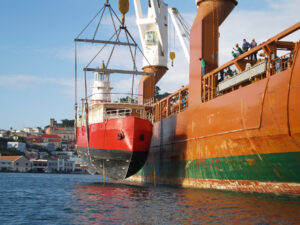
Lowering the lightship off the freighter

Besides using the lightship as a symbol for the resort/marina, Dieter wanted to use the ship as a restaurant and provide convenient bathrooms for the yachts anchored in his marina, to protect and preserve the pristine bay. Dieter identified the specifications to restore the lightship and design the interior space.

It took seven months to rebuild the lightship. First, they stripped the boat to the metal ribs and removed five tons of scrap. They then removed all the paint and rust and repainted the hull five times, using over one ton of paint. They welded ten tons of steel plates to strengthen the hull. Then they built the kitchen, the washrooms, and created sewage tanks.

Next was hauling the lightship onto a freighter to transport her to Grenada. Using old documentation, Dieter estimated the lightship’s weight to be approximately 110 tons. They used two cranes to load the lightship onto the cargo ship MV Schippersgracht.

The engine room of the Västra Banken lightship

BEEP, BEEP, BEEP – each time they tried to lift the lightship, the crane’s safety alarms went off, indicating the load was too heavy. The stern was much heavier than the bow, further complicating the process. The cranes, licensed and insured for 240 tons, would not lift the overweight lightship. They tried lightening the lightship, but still, the cranes would not lift. After four hours of attempts, the Captain/Engineer agreed to turn off the safety system to raise the vessel if Dieter assumed any risk. Dieter agreed, and the cranes successfully and safely lifted the lightship. When  they  hauled her out, they realized she was 250 tons, over twice the projected weight. She was the heaviest ship the freighter’s cranes had ever lifted.

They welded the lightship to the freighter’s top deck after loading 20,000 tons of paper into the hold to stabilize the freighter. The voyage lasted two months, sailing from Rostock to Southampton, then Scotland, Baltimore, the Virgin Islands, Antigua, and finally arriving in Grenada. The Västra Banken #23 lightship arrived in St. Georges, Grenada, West Indies, in December of 2006. She unloaded within an hour, with no issues. From there, they towed her to her new home in Egmont Harbor and the site for Le Phare Bleu resort.

Initially, the lightship was the only restaurant at the emerging resort. Later, Dieter moved the primary restaurant onto land. Now the lightship serves drinks, light meals, and is a popular music venue.
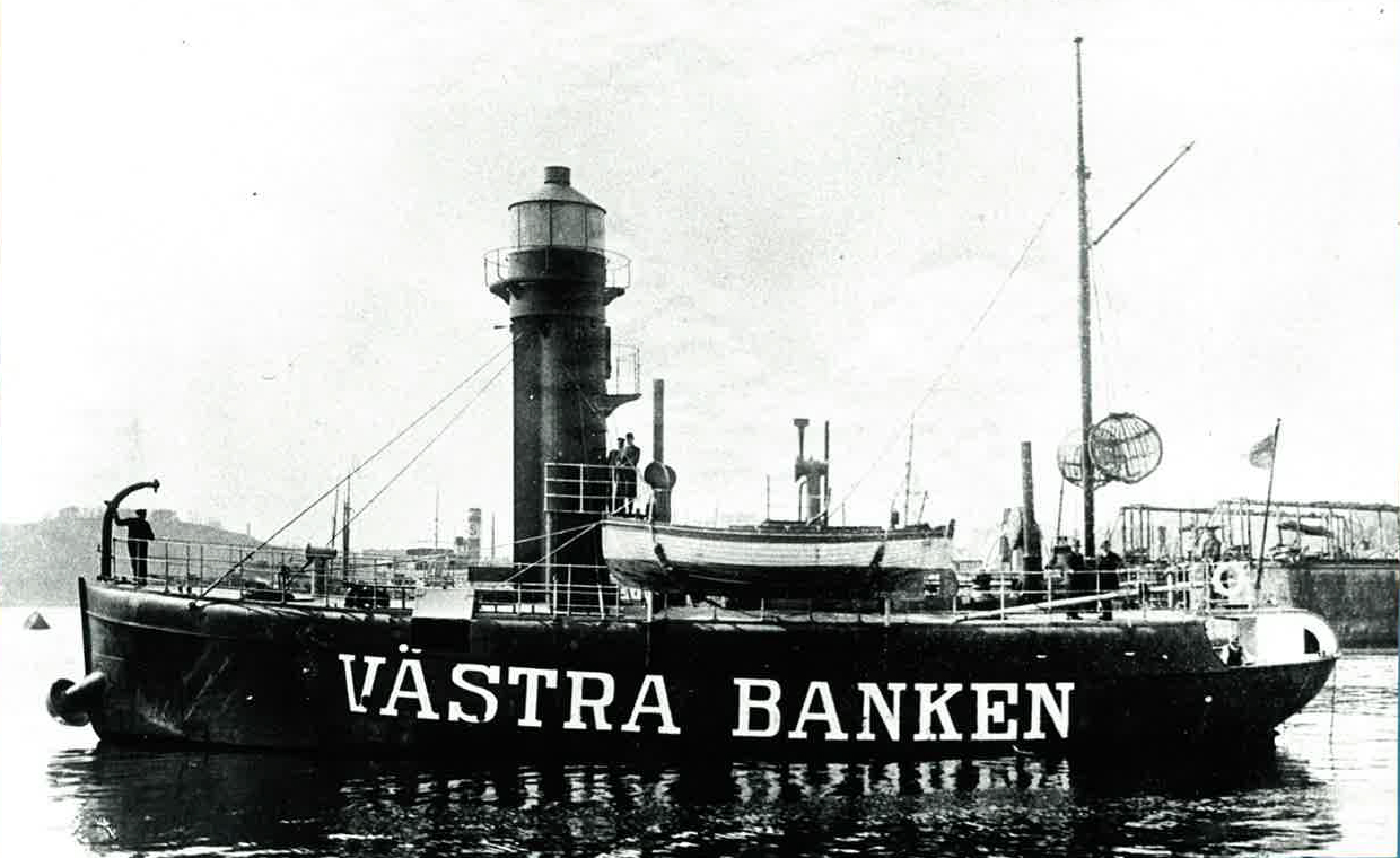
Historic image of how the Västra Banken Lightship originally looked. (Courtesy Swedish Maritime Administration)
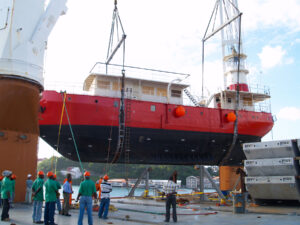
Removing the lightship from the freighter

Last year, Dieter wanted to see if he could get the almost 100-year-old engine running. Everyone wagered whether it would start and how long it would run. Bets placed, with beers in hand, sailors and friends crowded into the engine room to bear witness to the test. The first attempt to start the engine failed, but the team did not give up. After guiding the fly-wheel back to the start position and priming the fuel pump a second time, the first cylinder began chugging away. Cheers erupted in the engine room and on the top deck as the engine rumbled, and dark smoke spewed forth. Dieter believes this is one of the oldest running engines in the world.

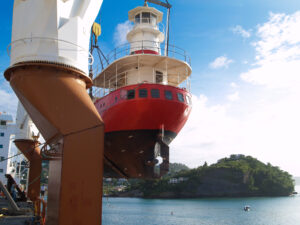
Another view of removing the lightship from the freighter


Only one of the two cylinders ran, and the cooling system wasn’t working, so they stopped the engine at 12 minutes and 47 seconds. They will do some work and will try again later this year. You can watch the engaging video of their efforts on YouTube or Le Phare Bleu’s website.

https://www.youtube.com/watch?v=hi0EV_0YSFM
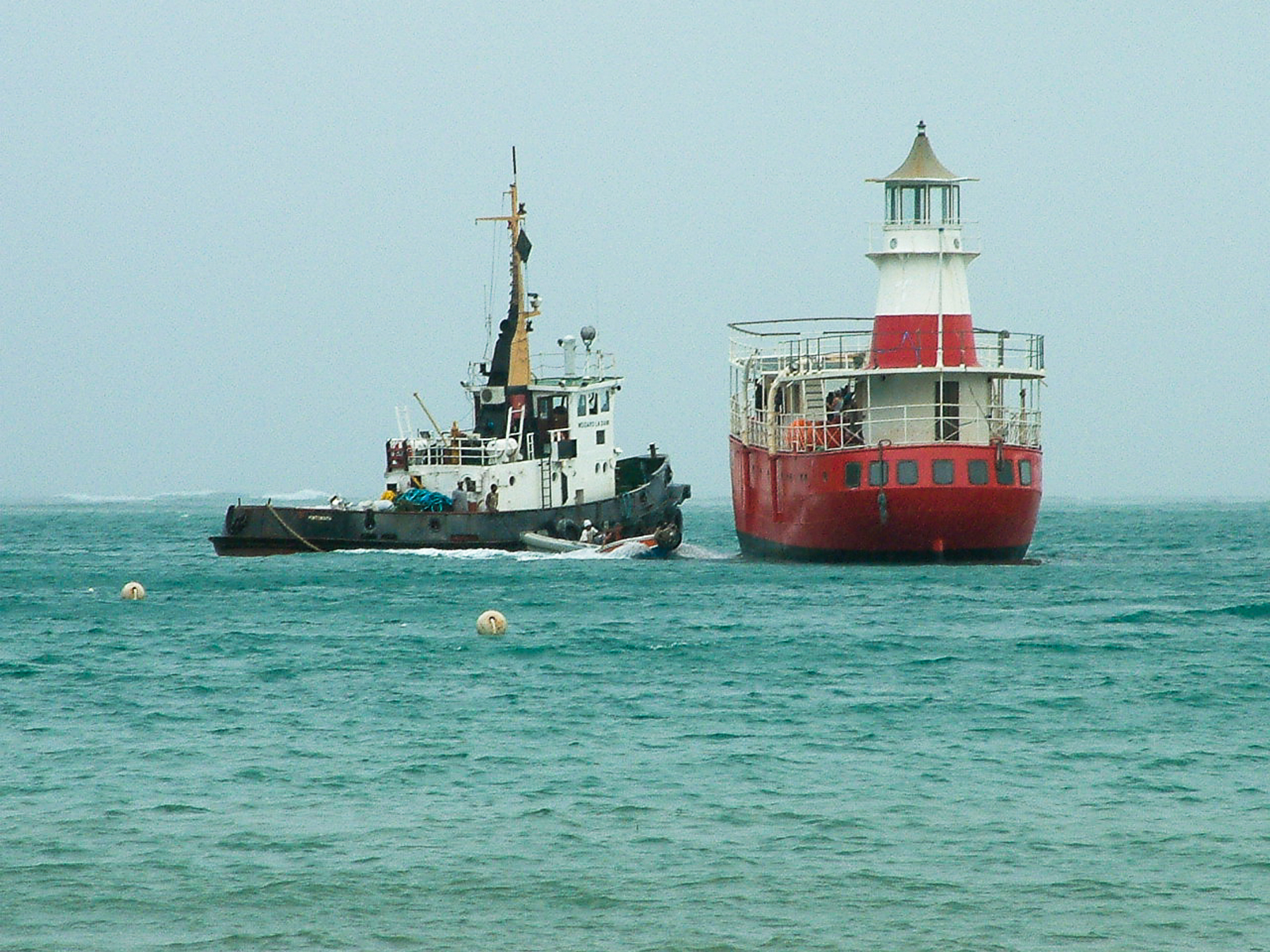
Towing the lightship from St. Georges in Grenada


The Västra Banken #23 proudly stands as a signature symbol for the resort. It surprises and delights visitors to see a Swedish lightship in Grenada. For those not knowledgeable about lightships, a series of informative panels in the lightship’s museum room teaches about lightships, keeping their history alive for new generations. Dieter’s lightship is a beacon for the resort and a tribute to the fascinating history of Swedish lightships.

(Unless otherwise noted, all photos are courtesy of Dieter Burkhalter)
 

Share:
Reading time: 7 min
Carnival, Grenada

SpiceMas – A Cultural Spectacle

January 22, 2020 by Candi Licence No Comments

ghostwritten by Candi Licence for SpiceMas Corporation Carnival Article

November 2019, for Truly Discover Grenada, Carriacou, and Petit Martinique (Annual Visitor’s Guide)

Are you going to be in Grenada, the second week of August?  Lucky you! SpiceMas, Grenada’s week-long Carnival extravaganza, showcases the best of Grenadian culture and traditions.  Plan to be enticed, enthralled, and engaged in non-stop fun.

This annual celebration, filled with many unforgettable events, is designed to make you want to be part of the action. Dance along with masqueraders costumed in feathers and sequins as they parade through the streets.  Cheer for your favorite artistes as they compete in fierce Soca, Calypso, and Steel Pan competitions to capture their Monarch crowns and bragging rights for the next year. Witness the enthralling and nail-biting beauty pageant to crown the National Carnival Queen. If you dare, step out of your comfort zone and join J’Ouvert, an over-the-top, raucous pre-dawn street parade.

Carnival in the Caribbean islands originated in the 18th century when French colonial masters held extravagant feasts and elaborate masquerade (Mas) balls before Lent. Slaves, prohibited from participating in the festivities, created their own celebration combining their master’s events with African traditions and disguised themselves to avoid being recognized for some of the mockery they preformed.

Today, you can watch Traditional Mas bands preserve the historical roots of Carnival. The Jab Jab players entrance everyone. During slavery, plantation owners would often kill uncooperative slaves by throwing them into a boiling copper of molasses for refusing to work. Jab Jab players portray spirits of murdered slaves who return to haunt their masters. They cover themselves with molasses, tar or used motor oil, carry torches, whips, and chains.  They are present throughout Carnival, and they are the highlight of J’Ouvert, an early morning street parade filled with costumes, blaring Soca music, and rum.  You will never forget seeing these characters emerge from the darkness carrying torches and engage in outrageous antics.

Grenada is known worldwide for our amazing J’Ouvert, and it a highlight of Carnival.  Some dress up in their most outlandish costumes, while others use the opportunity to evoke the spirit of their ancestors, cover their faces and bear placards with thought provoking messages, all while dancing down the boulevard to pounding Soca music. Bumping against each other, they end up covered in oil, paint, or even famous Grenadian chocolate. You can safely watch from the sidelines or jump in, join the fun, and become part of the tapestry of color.

Traditional bands play essential roles in Carnival.  Wild Indians portray the indigenous people of Grenada. The magnificent Moko Jumbies are costumed characters who strut on 10 to 15-foot-tall stilts and tower over the crowds watching for evil. Maypole Dancers create intricate designs with their streamers. The Vieux Corps dress all in black and conceal their identity with painted masks. They are silent except for their tapping wooden shoes, portraying the loss of identity, status, and the complete invisibility of slaves. Short Knee bands are brilliantly costumed, masked characters with short pants, mirrors, and bells. They dance in intricate patterns, chant, demand loose change, and throw powder in the air to bless the crowd. Which traditional band will be your favorite?

More recent Carnival events join the Traditional Mas bands. You’ve seen pictures of Fancy Mas or Pretty Mas bands. Brimming with scantily clad dancers wearing elaborate feather headdresses and covered in sequined outfits, masqueraders saunter down the street in a dazzling parade. Be sure to take pictures of this spectacular display of costumes and dance moves.

Masqueraders parade through the streets after dark wearing neon headdresses and holding glowing torches during Monday Night Mas. Row upon row of players perform intricate patterns with their colorful props and fill the night with waves of pulsating colors. You will be dazzled by the masses of people, lights, and routines.

Music is an integral part of Grenadian culture. Original songs and melodies are composed specially for the SpiceMas competitions. If you love Soca, Calypso, and Pan, you are in for a treat.

Dimanche Gras is a fierce Calypso contest where lyrics highlight political and social issues that the country faces.  Calypso is sometimes called the poor man’s newspaper. The artistes leverage their songs to give voice to controversial topics like healthcare, education, or domestic abuse that may otherwise get ignored.

The Groovy and Soca Monarchs are awarded their coveted crowns based on specific judging criteria as well as crowd appeal.  Soca, sometimes called Power Soca, has the thumping, fast-paced rhythm that everyone associates with Carnival while Groovy has a slower-paced beat, and sweeter sound. The artistes stage extravagant spectacles using lights, smoke, dancers, and special effects to work the crowd to a frenzied fever. Sit in the stands to observe the action or be on the ground to be pulled into the madness of hundreds of ecstatic fans to scream and move to the music.

The Steel Pan competition, Panorama, is an explosion of sound and movement.  Bands with 40 to 100 players pound metal drums of all sizes and shapes to create intricate melodies usually based on the most popular Soca songs.  With braids flying and bodies swaying in time with the tune, these talented musicians fill the stadium and the surrounding areas with triumphant sounds.

If you love beauty and pageantry, the National Carnival Queen Show captivates and entertains.  Each contestant, already their parish queen, competes on talent, Carnival costume, swimwear, eveningwear, and their interview. Loyal fans fill the audience and they loudly encourage their favorite queen. Still it is the judges’ difficult task to determine who will reign as the National Carnival Queen for the next year.

Don’t miss one of the most engaging and captivating parts of Carnival, the Children’s Carnival Frolic. Young children participate in their own event that keeps Carnival relevant for the next generation and teaches cultural traditions. You’ll delight in seeing children as young as three enjoying themselves as they  cross the stage dressed in either Traditional Mas or Fancy Mas costumes in this precious and cherished tradition.

Carnival is a special time where Grenadians come together to celebrate culture, showcase tradition, and engage in a spectacular multiday event that consumes the entire country. Join us for the best party in the Caribbean, SpiceMas – Many Events, One Carnival.

Share:
Reading time: 5 min
Grenada, Moving to Grenada

Searching for our Dream Caribbean Haven

January 8, 2020 by Candi Licence 2 Comments
Thursday, 21 November, 2019

Dear Reader,

“I’ve won a trip to the Caribbean and can’t use it; do you want to go?”

When Candi’s boss asked her that question, she didn’t hesitate in her reply…

“Give me two hours to pack my bag.”

That was how she first traveled to the Caribbean back in 1986. In the years since, it became a much-loved vacation spot and today, for Candi and her husband Michael, it’s home.

Their story, below…

Victoria Harmer
Managing Editor, International Living Postcards

* * * * * * * *

Searching for our Dream Caribbean Haven
By Candi Licence

Stepping off the plane, I was struck by the Caribbean warmth. You can be warm in winter. My husband Michael and I had experienced the long, cold Connecticut winters, and my first thought was; we need to figure out how to do this every year.

So, we began taking regular trips to different spots in the Caribbean. On vacation in Antigua, we met a dive instructor, originally from the U.S. He had arrived on the island a few years earlier…and never left.

After meeting him, we began to start seriously considering how we could make our own full-time move to the Caribbean. I pored over International Living articles to understand the key issues and processes for making an international move.

Michael and I spent the next six years crisscrossing the Caribbean, visiting 13 more islands, looking for the perfect fit. We arrived in Grenada for the first time in 1990. We stayed at an expat-run resort—the owner was a retired stockbroker from New York. It didn’t take long for us to fall in love with the people and the island.

We continued to visit new islands but kept coming back to Grenada. Every time the plane landed, we felt at home.


It’s not hard to see why Candi and Michael fell for Grenada. ©Candi Licence

Grenada met all our criteria. It is mountainous and lush, English-speaking, and below the hurricane belt. Land prices were much lower than the more well-known islands. Most important, the people are lovely and extremely friendly.

In 2013, I’d had enough of U.S. corporate life, and I proposed to Michael that we quit our jobs and travel full-time. We sold most of our possessions, stored art and heirlooms, and set off in May 2014. We planned to rent a house, stay in each location for three months, and then move to a new location.

We began our journey focused on the U.S. because we were traveling with our dog. We spent the first year in Key West, the Outer Banks of North Carolina, Sarasota, Florida, and then on to Grenada.

Even though we traveled to Grenada many times, we had never stayed longer than two weeks, so this would be a test of living like a local. U.S. citizens can stay in Grenada for three months before needing to get a visa. We purchased plane tickets for a 90-day stay.

Michael, a professional photographer, immediately established a business shooting beauty and fashion images. He worked at least five days a week and loved it. I had started a blog when we first began traveling, and I continued to write about our travels and life in Grenada.

Three months felt too short, and we were confident that Grenada would be the place we would eventually settle. We were committed to renting for flexibility, but we knew we would come back the next year for another three-month stay.

I was having trouble finding a rental that included enough space for Michael’s studio and one that would welcome our Irish Setter. Five days before we left Grenada, as I expressed my frustration and concerns about finding a great rental, Michael suggested we buy a house. We knew we’d eventually live in Grenada, so, why not?

The house we ended up buying wasn’t available to view until 4 p.m. the night before we left the island. After a 45-minute tour, as we were driving away, Michael asked how much we were going to offer. I gulped. I’m not a quick decision-maker, I like to research extensively and thoughtfully.

Then I thought, we knew what we wanted after staying in so many places, and this house checked so many boxes. We made an offer, and the next morning, we flew off the island.

We continued traveling while negotiating a deal to buy the house, which closed in 2015. The building inspection uncovered some things that needed to be addressed, and we hired a reputable contractor to begin work before we moved in. After the closing, we returned to Grenada to remind ourselves about the details of the house we bought.

We were pleasantly surprised that it was even more beautiful than we remembered.

The view from our back porch at sunset.
©Candi Licence

We moved in permanently in December of that year. The contractor had done quality work, so we then contracted with him for major renovations that took another year.

We’ve lived in Grenada happily for four years now and have dual citizenship. The process of becoming a citizen was easy, but lengthy. First, we needed to either own property or to have lived in Grenada for two years before applying for permanent resident status. Grenada requires a lot of information, including medical, bank, and police records. After permanent residency was granted, we applied to be citizens. During this process, parliamentary elections were held, and a different political party came into power. Our paperwork was delayed while the new government got established. The wait time between receiving residency and getting citizenship is faster now.

We’ve comfortably become part of the Grenadian community. We practice yoga, go to the gym, have learned how to cook many local dishes, and have started growing orchids. I’m blessed to have a wonderful Grenadian best friend who I’ve known since she was 11 (she’ now 32). I’m a Godmother to her 13-year-old daughter, and we have dozens of Grenadian friends. We’re tapping into the expat community. Every morning, we wake up and marvel at our life. We love this place.

Michael expanded his photography business and was the official photographer for Grenada’s Carnival for three years. I write for print and online publications about Grenada and our travels, and make custom jewelry.

I’ve also joyfully become an unofficial island ambassador, providing insider information and insight to others who want to visit or call Grenada home.

Share:
Reading time: 5 min
Grenada, Island Life

To Hoard, Or Not To Hoard, That Is The Question

February 25, 2016 by Candi Licence No Comments

By Candi Licence

Published February 25, 2016, by Women Who Live on Rocks

https://womenwholiveonrocks.com/to-hoard-or-not-to-hoard-that-is-the-question/

squirrel-hoarder.jpg


This is one of the newest ethical questions of my rock life. Hoard for self-preservation? Or not hoard for the greater good?

You see, though island life is wonderful, you quickly begin to live within limitations – particularly with if (and when) you can buy something you want or need. You often need to balance your desires with the noble action of restraining yourself for the whole (everyone else).

Here is a simple example: Dawn dishwashing soap. You non-rock readers are probably shaking your head, Dawn? Really? Yes, Dawn. REALLY! Local dishwashing soaps, like Squeezy, look a lot like Dawn but are thinner and not as effective. This means you use 3 times as much soap and still don’t get quite the desired effect: squeaky clean dishes.

In the absence of Dawn, I started trying all the brands. One day, I saw Ajax. It sounded like the great soap I remember from the States, so I triumphantly marched from the store to try it out, only to find that it is a heavily watered down version of what I know and no better than the local brand.

And then, one day, right there on the shelf, there were five (!) beautiful, big bottles of Dawn. Since I’m a newbie at island life, I only bought one bottle. And boy, was it SWEET! Clean dishes, a bottle that lasted, etc. You get the idea. Then, disaster struck.

(Read the rest of the article here.)

Share:
Reading time: 1 min

About me

Thank you for visiting my writer's website. This site contains articles that have been published in print and online.

Subscribe to my Posts

If you’d like me to send you an email notification when a new article is posted, please sign up below.

Popular Posts

Searching for our Dream Caribbean Haven

Searching for our Dream Caribbean Haven

January 8, 2020
Finding the Essential Greek Food Experience in Santorini’s Tavernas

Finding the Essential Greek Food Experience in Santorini’s Tavernas

July 18, 2019

Blooming Brilliant

December 23, 2020

Categories

  • Articles about Travel Writing
  • Carnival
  • Destinations
  • Fashion
  • Food
  • Greece
  • Grenada
  • Island Life
  • Maine
  • Moving to Grenada
  • Portland
  • Writing

Instagram feed

Tags

Art Fabrik Batik Carnival Chelsea Flower Show fashion Finikia Gardens Greece Grenada hoarding International Living Island Life J'Ouvert La Ponta Lefkes Le Phare Bleu Lighthouse metaxi Mas Meze Meze Moving to Grenada Music Portland Maine Restaurant Santorini SpiceMas Symposion Transitions Abroad Travel Perks Travel Writing Tsabouna bagpipe Victoria Mansion Västra Banken lightship Yannis Pantazis

Recent Posts

A Swedish Lightship’s  Caribbean Retirement

A Swedish Lightship’s Caribbean Retirement

January 31, 2021

Blooming Brilliant

December 23, 2020

SpiceMas – A Cultural Spectacle

January 22, 2020

Search

Recent Posts

A Swedish Lightship’s  Caribbean Retirement

A Swedish Lightship’s Caribbean Retirement

January 31, 2021

Blooming Brilliant

December 23, 2020

Categories

  • Articles about Travel Writing
  • Carnival
  • Destinations
  • Fashion
  • Food
  • Greece
  • Grenada
  • Island Life
  • Maine
  • Moving to Grenada
  • Portland
  • Writing
© 2016 copyright PREMIUMCODING // All rights reserved
Camila was made with love by Premiumcoding